
Introduction
In the two decades since we launched Online-BusinessSolutions.com in 2004, the e-commerce landscape has shifted from “just having a website” to “owning the customer journey.” As we move through 2026, the question for growing brands isn’t just about where to host products—it’s about the Total Cost of Ownership (TCO) and the flexibility to innovate.
Should you stay within the “walled garden” of a SaaS giant like Shopify, or is it time to invest in a Custom Headless solution? Based on our 22-year legacy in digital strategy, here is the honest breakdown of ROI in today’s market.
The State of E-commerce in 2026
Success this year is defined by two metrics: Speed and Personalization. With the rise of AI-driven shopping assistants, your site’s backend must be able to feed data to LLMs instantly.
1. Shopify in 2026: The Speed-to-Market King
Shopify remains the default choice for 90% of D2C (Direct-to-Consumer) brands. In 2026, they have moved beyond simple templates.
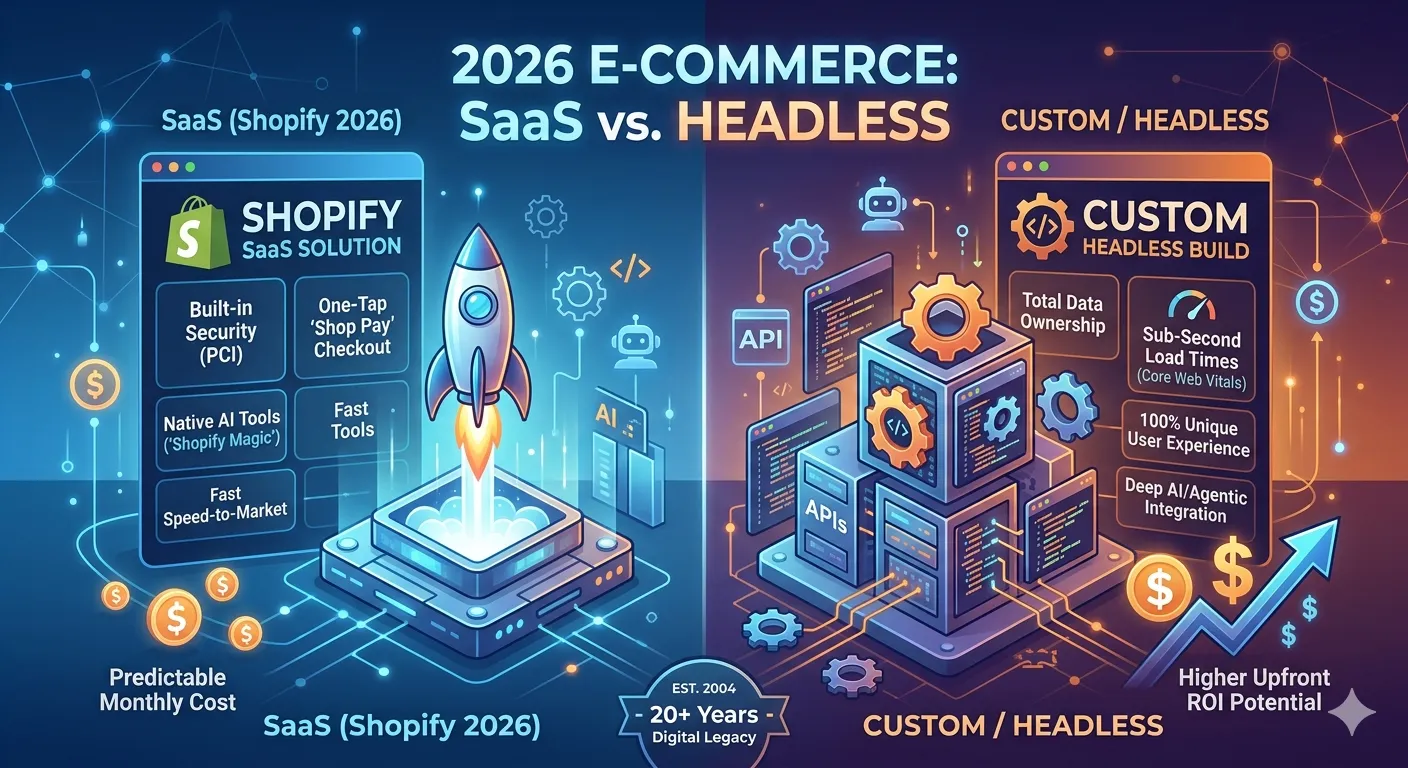
The Big Win: Shop Pay now converts up to 50% better than guest checkouts. In a world of short attention spans, this “one-tap” economy is a massive ROI driver.
2026 Innovation: Their native AI, Shopify Magic, now handles everything from customer support to automated SEO metadata generation.
The Cost: While the monthly fee is predictable, transaction fees and “app creep” (paying for 10+ different monthly plugins) can eat into margins as you cross the $2M annual revenue mark.
2. Custom E-commerce: The Competitive Moat
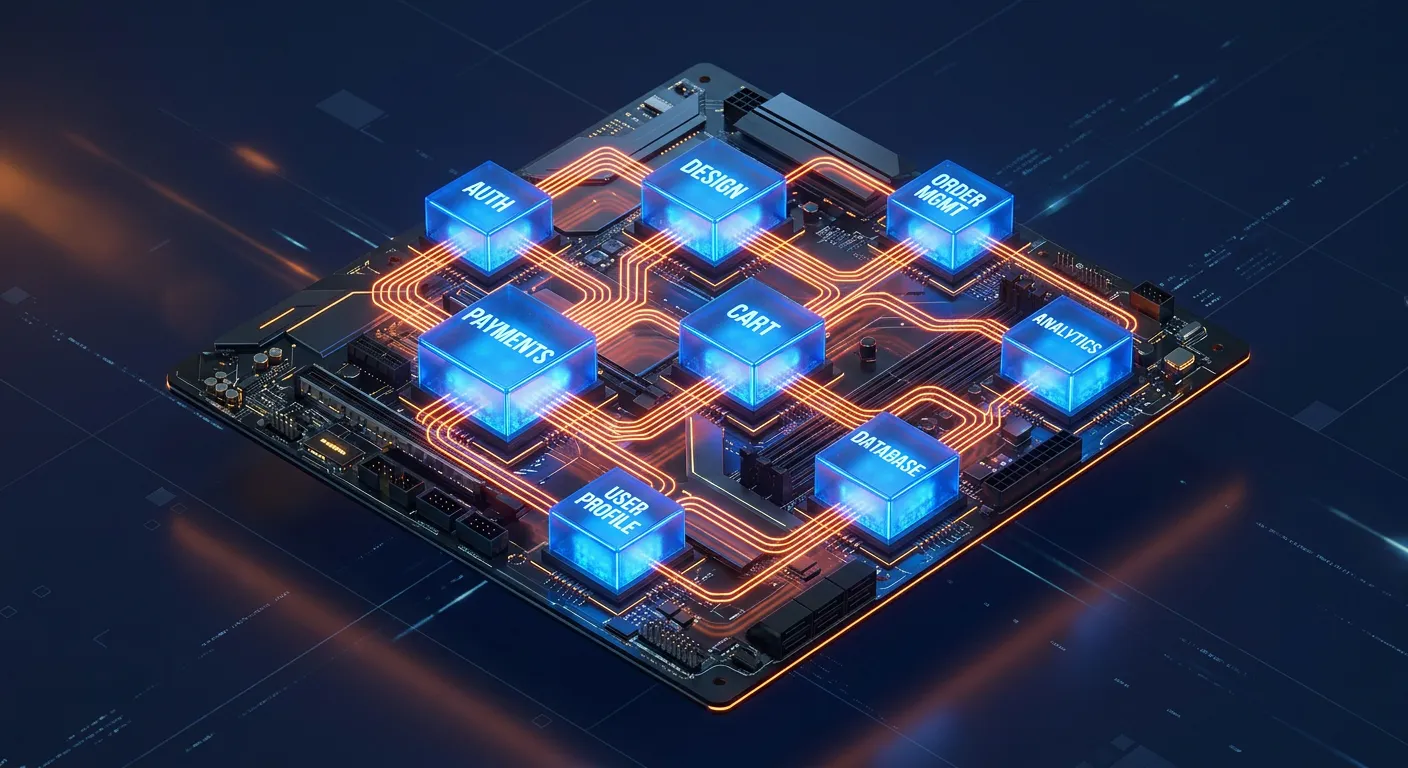
A custom-built or “Headless” solution is no longer just for enterprise giants. Many mid-market brands are choosing custom builds to escape the “template look.”
The Big Win: Total Data Ownership. When you build custom, you aren’t at the mercy of a platform’s changing terms of service or fee hikes.
2026 Innovation: Integration with Agentic Workflows. A custom backend allows you to build proprietary AI agents that manage your inventory and logistics in ways Shopify’s API might restrict.
The Reality Check: Implementation costs are 56% higher on average than SaaS. You are responsible for security, PCI compliance, and maintenance.
ROI Comparison: At a Glance
| Feature | Shopify (SaaS) | Custom / Headless |
| Setup Time | 1–4 Weeks | 3–6 Months |
| Upfront Cost | Low | High |
| Maintenance | Included | Required (Developer Team) |
| Conversion Rate | High (via Shop Pay) | Highest (Fully Optimized UX) |
| Data Control | Shared | 100% Private |
The Decision Matrix: Which One for You?
Choose Shopify if:
You need to launch or pivot in under 30 days.
Your team is primarily focused on marketing, not engineering.
You want built-in security and global compliance (GDPR, etc.) without hiring a CISO.
Choose Custom if:
Your business logic is unique (e.g., complex subscriptions or B2B manufacturing).
Core Web Vitals and sub-second load times are your primary competitive advantages.
You have surpassed $10M in annual GMV and want to eliminate “per-transaction” platform fees.
The Online Business Solutions Verdict
Our 20-year perspective has taught us one thing: Don’t over-engineer too early. For most businesses looking to hit that next growth milestone in 2026, Shopify Plus offers the best balance of power and simplicity. However, if your brand identity relies on a 100% unique user experience, the investment in a Custom Headless build is the only way to truly stand out in a crowded AI-driven market.